
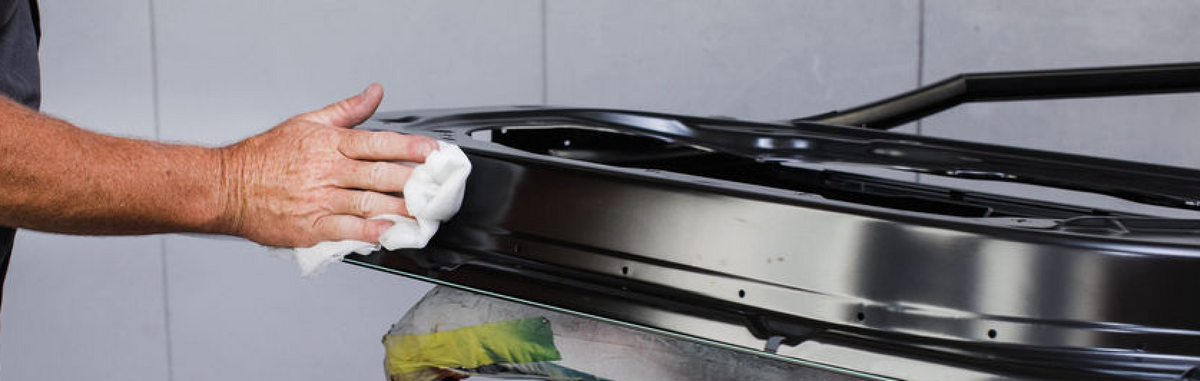
What is a tack cloth?
A tack cloth is a lint-free prep wipe treated with a specialized tacky adhesive designed to capture and hold microscopic debris without transferring sticky residue to the surface. It serves as the final surface-cleaning step prior to applying primer, paint, varnish, or topcoat. By lifting loose particles that standard shop towels, vacuuming, or compressed air leave behind, a tack cloth prevents finish defects like bumps, craters, pinholes, and poor coating adhesion.
What is a tack cloth made of?
Tack cloths are constructed from a woven fabric base saturated with a thermo-stabilized tacky coating. The underlying fabric, weave tightness, and coating chemistry dictate the cloth’s durability and surface compatibility.
- Fabric Base (Cheesecloth vs. Woven Cotton): Low-cost consumer tack cloths use loose-weave gauze or low-density cheesecloth that easily tears, snagging on rough edges and shedding loose threads onto the workpiece. Industrial-grade options use a high-density, 100% woven cotton material designed to resist fraying and withstand heavy friction across sharp contours.
- Tack Chemistry (Hydrocarbon Resins, Beeswax, Synthetic Coatings): Standard woodworking tack cloths rely on beeswax or heavy hydrocarbon resins. While effective for wood, these soft waxes bleed off under pressure or heat, leaving a slick film that ruins paint adhesion on non-porous surfaces. Professional-grade cloths utilize synthetic, heat-stable resins engineered to remain locked inside the cotton fibers.
- Telesto Woven Cotton Construction: Telesto Tack Cloths feature a continuous-mesh, heavy-duty woven cotton structure saturated with a proprietary wax and silicone free formula. This ensures high particulate capacity, wet and dry process compatibility, and zero surface-contaminating residue.
How do you use a tack cloth correctly?
Using a tack cloth correctly requires minimal pressure and proper surface preparation to avoid transferring sticky resin onto your project.
- Clean large debris first: Vacuum the surface or blow it down with clean, dry compressed air. A tack cloth is designed exclusively for micro-dust, not heavy sawdust or loose shop grit.
- Put on clean nitrile gloves: Wear fresh powder-free nitrile gloves to prevent skin oils from transferring to your prepped surface and to keep tack resin off your hands.
- Unfold and loosely bundle the cloth: Fully unfold the tack cloth, then gently wisp or crumple it into a loose, soft ball. Never press a flat, folded tack cloth directly onto a surface, as flat pressure forces resin onto the substrate.
- Wipe lightly across the surface: Gently glide the bundled cloth over the surface using only the weight of your hand. Let the sticky fibers lift the dust; do not scrub or press firmly.
- Refold between passes and coats: Periodically refold the bundle to expose a fresh, sticky surface. Repeat this process immediately before your base coat and between every intermediate sand-and-coat cycle.
Can you use a tack cloth on metal?
Yes, you can use a tack cloth on metal, provided the cloth is specifically formulated to be wax and silicone free.
A widespread myth in paint prep suggests tack cloths should never touch raw steel, aluminum, or automotive panels. This misunderstanding exists because standard consumer tack cloths contain beeswax and soft hydrocarbon additives that leave an invisible film on metal substrates. On non-porous metal, paint cannot absorb or hide this film, causing fisheyes, bubbling, and topcoat delamination.
Professional metal fabrication, aerospace, and collision repair shops rely on heavy-duty, wax-free tack cloths to pick up fine metal shavings, aluminum dust, and ambient shop grit. When working with metal or auto body panels, always select a wipe explicitly rated for metal prep to guarantee complete paint bonding. Explore our specialized Automotive Paint Prep and Aircraft Paint Prep collections to match your precise substrate requirements.
Why does silicone contamination matter in paint prep?
Silicone contamination is one of the most costly failure modes in production painting, collision repair, and industrial finishing. Silicone molecules possess an extremely low surface energy. When trace amounts of silicone sit on a surface during paint application, the wet paint pulls away from the contaminated spots, creating circular craters known as "fisheyes" or pinhole voids.
Once silicone enters a spray booth or prep area, it spreads rapidly via shop air, hands, and inferior prep rags. Standard shop towels and cheap tack cloths often contain silicone lubricants used during textile manufacturing. Using a silicone-treated wipe directly transfers these contaminants to the workpiece. Utilizing a guaranteed wax and silicone free tack cloth protects production workflows, eliminates expensive teardowns, and ensures flawless topcoat leveling.
Can you reuse a tack cloth?
Yes, a tack cloth can be reused across multiple projects, provided it remains clean, sticky, and free of dry debris or heavy contamination.
Because industrial tack cloths feature continuous-mesh woven cotton, you can refold the cloth dozens of times to expose unused tacky surfaces within the inner layers. However, reusability depends on three specific conditions:
- Particulate Loading: Once all exposed surfaces are covered in dust or metal shavings, discard the cloth. Using a fully saturated cloth will scratch sensitive finishes or drag captured grit back across the panel.
- Storage Environment: If left exposed on a workbench, the cloth will attract ambient air dust and dry out within hours. Stored in an airtight container, a high-quality cloth stays usable for weeks.
- Wet vs. Dry Capability: Standard tack cloths harden and lose adhesion when exposed to moisture or solvents. Telesto Tack Cloths are engineered to retain their tackiness in both wet and dry prep environments.
When should you not use a tack cloth?
While tack cloths are essential for final dust removal, they are not universal cleaning tools. Do not use a tack cloth in the following scenarios:
- Oily or Solvent-Wet Surfaces: Never use a tack cloth to wipe away wet oils, grease, or standing prep solvents. Wet chemicals break down the cloth's tack resin, smearing sticky residue across the surface. (Use dedicated dry shop wipes or solvent wipes first).
- Rough, Unfinished Floor Boards: Bare, heavily split lumber or coarse concrete will snag the cotton fibers tearing the cloth and leaving thread debris behind.
- Heavy Debris Cleanup: Using a tack cloth to clean up thick piles of sawdust or metal shavings instantly clogs the mesh and wastes the cloth.
- Heated Surfaces: Wiping panels that are hot from sun exposure, heat lamps, or recent welding will melt the tacky resin, transferring residue to the substrate.
Tack cloth versus other surface prep methods
Selecting the right tool for final surface prep impacts finish quality and shop efficiency. The table below outlines how tack cloths compare to alternative cleaning methods:
|
Prep Method |
Main Function |
Advantage |
Limits |
Best For |
|
Tack Cloth |
Micro-dust and static particulate removal |
Captures fine dust; leaves zero residue when wax-free |
Not meant for bulk debris or heavy liquid wiping |
Final pass before paint, stain, clear coat, or topcoat |
|
Microfiber Towel |
Dry dusting and light surface polishing |
Washable and reusable; good bulk dust pickup |
Can generate static that attracts dust back to panels |
Dry dust cleanup on cured paint or clear coats |
|
Compressed Air |
Rapid removal of heavy, loose debris |
Fast; reaches deep crevices, and seams |
Blasts dust into shop air to settle back onto wet paint. |
Initial blowdown after heavy sanding |
|
Solvent / Degrease Wipe |
Chemical and oil removal |
Dissolves oils, grease and silicone |
Does not capture dry, airborne micro-dust |
Initial chemical cleaning before final sanding and tacking |
|
Paper Shop Towels |
General wiping and liquid spill pickup |
Inexpensive, disposable, widely available |
Sheds heavy lint, tears easily, lacks dust-capturing adhesive |
Basic shop and tool cleaning (see our guide on The Myth of Lint-Free Paper Shop Towels) |
How many tack cloths does a job take?
Tack cloth consumption varies based on surface area, substrate material, and environmental dust levels. Estimating your needs accurately prevents workflow interruptions and helps when buying bulk prep supplies.
- Woodworking & Small Projects (1 Cloth): A single cloth easily handles small furniture pieces, cabinet doors, or guitar bodies through multiple coats, provided it is stored sealed between uses.
- Automotive Refinishing & Body Panels (1 to 2 Cloths per Vehicle): A complete vehicle paint job typically requires one cloth for initial primer prep and a second fresh cloth for final basecoat/clearcoat wiping.
- Industrial & Fabrication Production (1 Case per Station): High-volume production shops, metal fab facilities, and commercial paint booths consume tack cloths consistently. Standardizing on bulk quantities—such as the Telesto Tack Cloth 1400 Count Bulk Case—ensures consistent unit economics and continuous stock across busy prep bays.
How should you store and dispose of tack cloths?
Proper handling ensures maximum tack cloth shelf life and maintains shop safety standards.
Storage Guidelines
To keep your tack cloths soft, pliable, and sticky, keep them sealed in their original airtight packaging until ready for use. If you are reusing a partially used cloth, fold it inward and store it inside a clean, zip-top plastic bag or an airtight container. Keep stored cloths in a cool, dry place away from direct sunlight, high heat, and heavy dust zones. High heat accelerates resin degradation, while open air dries out the adhesive.
Safe Disposal Procedures
Tack cloths saturated with solvent residue, oils, or combustible finishing materials must be handled according to local shop safety guidelines. Because resin-treated cloths contain organic oils and synthetic compounds, never burn tack cloths. Dispose of used wipes in an approved, fire-safe metal trash container designed for oily shop rags to prevent spontaneous combustion hazards.
How do you choose a tack cloth for production work?
When sourcing tack wipes for commercial paint booths, auto body shops, or manufacturing lines, consumer-grade options fall short. Look for these critical specifications when selecting a production-ready wipe:
- Wax and Silicone Free Formula: Essential for preventing topcoat defects, fisheyes, and delamination across metal, composite, and plastic surfaces.
- High Mesh Count Cotton: Heavy-duty, continuous-weave cotton holds up against sharp sheet metal edges, rivets, and rough grain without tearing or linting.
- Wet and Dry Process Capability: Choose wipes designed to perform in ambient dry wiping as well as humid or wet-sanding environments.
- Bulk Packaging Economics: Production environments require reliable inventory. Ordering from a dedicated Tack Cloth Collection in bulk cases lowers cost per unit and streamlines shop supply management.
- Made in USA Quality: Domestic manufacturing guarantees strict quality control, consistent resin application, and reliable material standards. For a complete overview of industrial wipe options, read our 2026 Ultimate Wiper Guide.
Frequently asked questions
What is the main purpose of a tack cloth?
The main purpose of a tack cloth is to remove microscopic dust particles, sanding grit, and lint from a surface right before applying paint, stain, varnish, or topcoat.
Do tack cloths leave a sticky residue?
Quality tack cloths do not leave residue if used correctly with light pressure. However, low-grade cloths containing wax or heavy resins can transfer sticky films to non-porous surfaces like metal or glass.
Can you wash and reuse a tack cloth?
No. Washing a tack cloth with water or detergent will strip away the specialized tacky coating and ruin the cotton fibers. Reusing is done by unfolding and refolding the dry cloth to expose fresh tacky layers.
Are tack cloths lint-free?
High-quality tack cloths made from continuous woven cotton or continuous filament mesh are virtually lint-free. Inexpensive cheesecloth options may shed loose threads along raw edges.
Is a tack cloth the same as a microfiber cloth?
No. Microfiber cloths use synthetic micro-polyester fibers to mechanically trap dust using static electricity, whereas tack cloths use a continuous cotton mesh impregnated with sticky resin to physically bond with and lift fine dust particles.
Should I use a tack cloth between coats of paint or varnish?
Yes. Sanding between coats creates ultra-fine dust that prevents the next coat from adhering properly. Using a tack cloth after light sanding ensures a smooth, professional finish.
Can I use rubbing alcohol with a tack cloth?
No. You should never soak a tack cloth in alcohol, acetone, or solvents. Solvents break down the sticky resin, melting it onto your workpiece and ruining surface prep. Use solvent cleaners first, let the surface dry completely, and then finish with a dry tack cloth.
Does a tack cloth work on plastic and fiberglass?
Yes. A wax and silicone free tack cloth is safe and effective on plastic, fiberglass, and carbon fiber composites, picking up static dust without leaving chemical residue.
How long does an unopened tack cloth last?
When kept sealed in its original airtight packaging and stored at room temperature, a high-quality tack cloth has an indefinite shelf life and will remain sticky for years.


